There are places that yachts visit, and then there are places that change a yacht owner. French Polynesia is the second kind.
Spread across an ocean area roughly the size of Europe yet holding less land than the city of Houston, this archipelago is the most sparsely navigated blue-water cruising ground on Earth. For a yacht owner who has already crossed the Med, threaded the Caribbean, and ticked off the Bahamas, French Polynesia is the last frontier that still feels genuinely undiscovered — not because it is empty, but because its true character only reveals itself to those who slow down enough to read it.
The Archipelago That Nobody Actually Sails
Ask a charter broker about French Polynesia and you will hear about Bora Bora. But Bora Bora is to French Polynesia what Monaco is to the Côte d'Azur — the famous face of a country that runs far deeper.
The territory is built from five archipelagos, each geologically distinct, each demanding a different yacht, a different crew mindset, and a different set of charts:
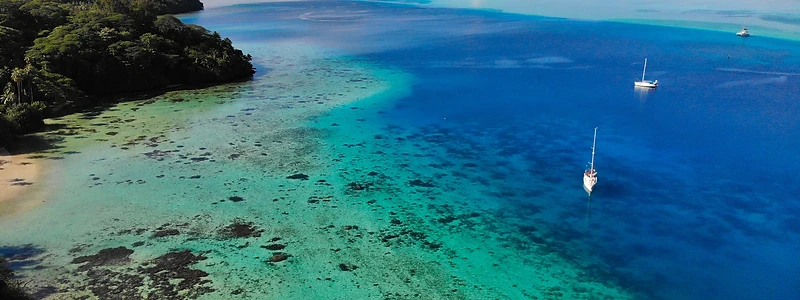
- The Society Islands — the postcard: high volcanic peaks ringed by barrier reefs and impossibly blue lagoons.
- The Tuamotus — the largest chain of atolls on Earth, pure coral rings floating in deep ocean, with no land higher than a coconut palm.
- The Marquesas — fortress islands of jagged basalt rising straight from the abyss, with no protective lagoon and no calm anchorage.
- The Gambier Islands — a forgotten volcanic cluster cradled inside a single vast lagoon, with a cool microclimate and the territory's finest black pearls.
- The Austral Islands — the southernmost, coolest, and least visited, where humpback whales gather to calve between July and October.
A yacht owner who treats these as one destination is making the same mistake as treating the Alps and the Sahara as a single trip. The magic lies in understanding that you are navigating five different countries stitched together under one flag.
The Pass: Where Ocean Becomes Lagoon
Every atoll in the Tuamotus is a closed ring of coral with one or two narrow channels — the passes — where the ocean and the lagoon exchange water twice a day. This exchange is not a gentle tidal creep. It is a roaring, river-like current that can exceed eight knots, reversing direction with the tide.
For a yacht owner, the pass is both the danger and the gift. Transit it at slack water and it is a serene glide into a sheltered inland sea. Mistime it and you face standing waves, whirlpools, and a current that can overpower a cruising yacht's engine.
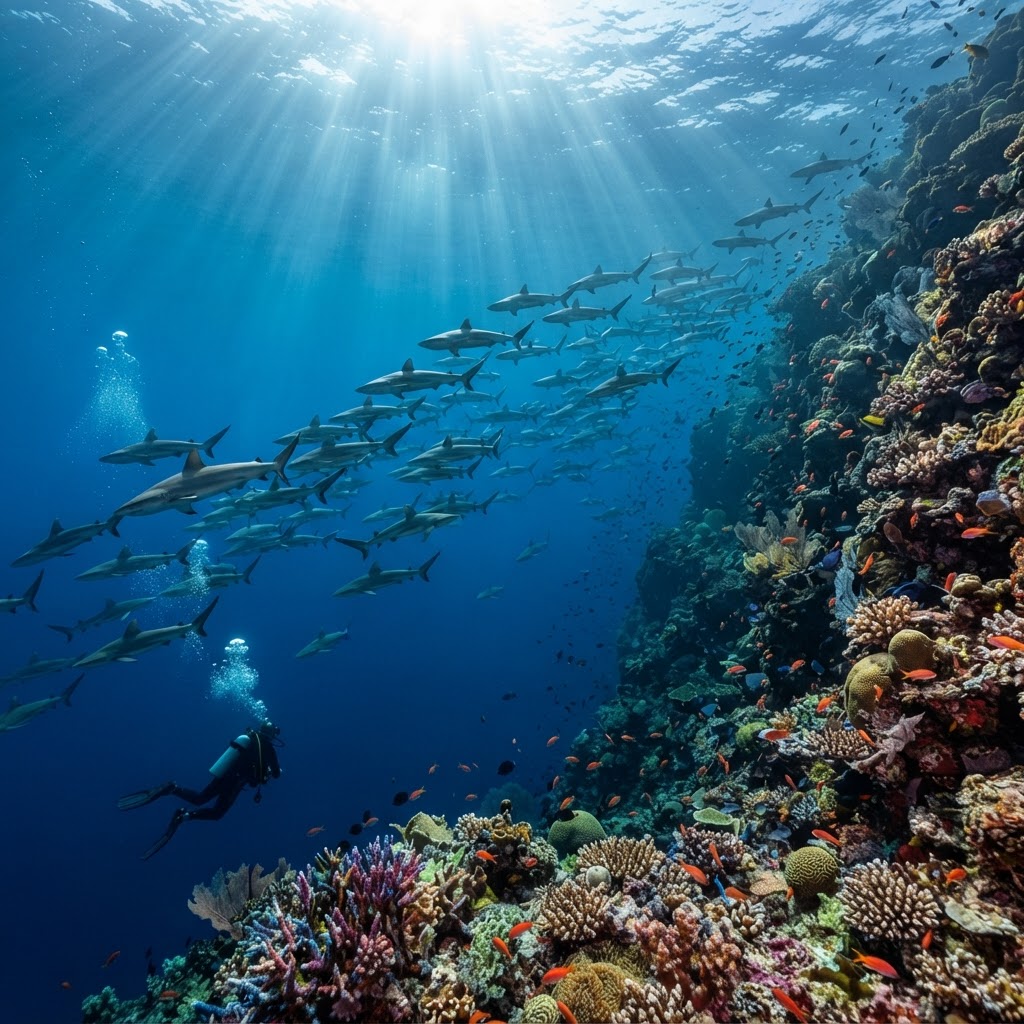
But the pass is also where the ocean delivers its abundance. As the tide floods, deep-ocean pelagic life is swept into the lagoon. As it ebbs, the lagoon empties its nutrients back to the blue. This daily pulse is what makes the Tuamotu passes some of the most alive underwater environments on the planet — and why Fakarava's South Pass, a UNESCO Biosphere Reserve, is home to the legendary wall of sharks, where hundreds of grey reef sharks hold formation in the current like commuters on a moving sidewalk. Also the pass at Fakarava runs at up to 6 knots.
This is not a dive you schedule. It is a dive the ocean schedules for you. A yacht owner anchored in the lagoon simply waits for the tide to turn, drops a tender at the pass, and drifts through on the incoming current alongside one of the densest aggregations of apex predators visible to the naked eye.
The Marquesas: Anchoring Without a Reef
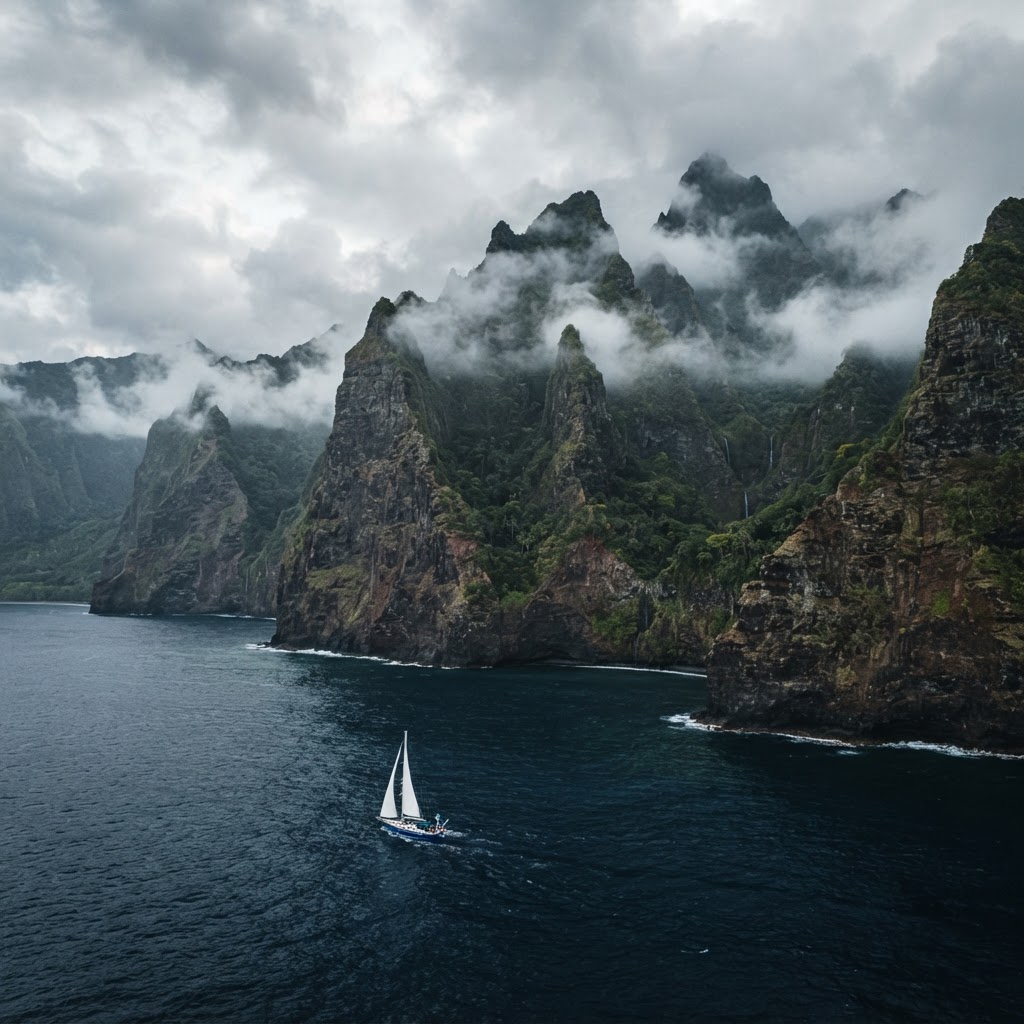
The Marquesas break every rule the Society Islands taught you. There are no barrier reefs. No lagoons. No sheltered turquoise anchorages. Instead, you drop the hook in deep water off a volcanic shore that climbs vertically into cloud forest, and you accept that you are exposed to the full swell of the open Pacific.
What you gain in exchange is the most dramatic landfall in cruising. Nuku Hiva's Baie de Taiohae is a drowned volcanic crater three miles wide, its caldera walls rising 3,000 feet on every side. You do not arrive at the Marquesas — you are swallowed by them.
The Marquesas reward the yacht owner who brings a tender and a willingness to go ashore. There are no marinas, no docks, no fuel barges. Water is collected from waterfalls. Fruit is traded with villagers for a few metres of rope or a tank of diesel. The islands are covered in marae — ancient stone platforms where Polynesian civilization held its ceremonies centuries before European contact — many of them reachable only by a path that begins where your tender meets the rocks.
Features Nobody Tells a Yacht Owner
The Gambier microclimate. Farther south and east than the rest of the territory, the Gambier Islands sit in a cooler, wetter band of ocean. This is why their black pearl farms produce the thickest, most lustrous nacre in the Pacific. A yacht that pushes the extra 1,000 miles east is rewarded not just with fewer boats but with a genuine climate shift — fleece weather in the tropics.
The counter-current advantage. Between the Tuamotus and the Marquesas, the Equatorial Counter-Current runs counter to the prevailing east-to-west trade winds. A yacht planning a southbound passage from the Marquesas to the Tuamotus can ride a favorable current of up to a knot — free speed, if you know where to look.
Makatea's freshwater caves. Makatea is a raised coral atoll — a rarity — where the ancient reef has been lifted hundreds of feet above sea level. Inside the island, a network of limestone caves holds fresh, drinkable water, a feature almost unheard of in the low coral atolls of the region.
The green flash. On a clear evening over an unobstructed Pacific horizon, the last sliver of the setting sun can flash a vivid, emerald green for a fraction of a second. It is not a myth. It is a refractive phenomenon that requires the cleanest air on Earth — and French Polynesia's vast, empty ocean delivers it more reliably than anywhere a yacht is likely to be.
Whale season in the Australs. The Austral Islands are one of the few places where humpback whales gather in numbers close enough to the islands that a yacht at anchor can hear them singing through the hull at night.
The Cruising Window
The season runs roughly April to October, when the trade winds settle from the east-southeast at a reliable 15–20 knots and the cyclone risk drops to near zero. A yacht arriving from Panama or the Galápagos typically makes landfall in the Marquesas — the logical gateway — then works west and south through the Tuamotus to the Society Islands, and onward to the Gambier or Australs for those with the range and the curiosity.
A proper French Polynesia cruise is not a two-week charter. It is a season. The territory rewards the yacht owner who treats it not as a destination but as a place to live for a while — to learn the passes, to trade with the villages, to wait for the green flash, and to accept that the ocean, not the itinerary, is in charge.
That, more than anything, is why it is the last frontier. Not because it is hard to reach, but because it cannot be rushed. And a yacht, finally, is the only tool ever invented that lets you go that slowly, that far, for that long.


